Ropes play a bigger part in everyday life than you might imagine. Ropes holding scaffolding on an industrial site, tying down tents or securing fishing fleets together for safety in a storm are a vital cog in our larger lives, but we often know barely anything about them.
The question is; with dozens of materials and types to choose from, how do you know which style is the right rope for your job?
At Whittam Ropes, we’ve spent over 40 years manufacturing marine ropes for Melbourne boat owners, and industrial ropes for Sydney industries, so we know that the right choice comes down to understanding what each type and material is actually built for.
This guide walks through the key rope types, the materials behind them, and how to match them to your application, whether that’s marine, industrial or general use.
Why the Right Rope Matters
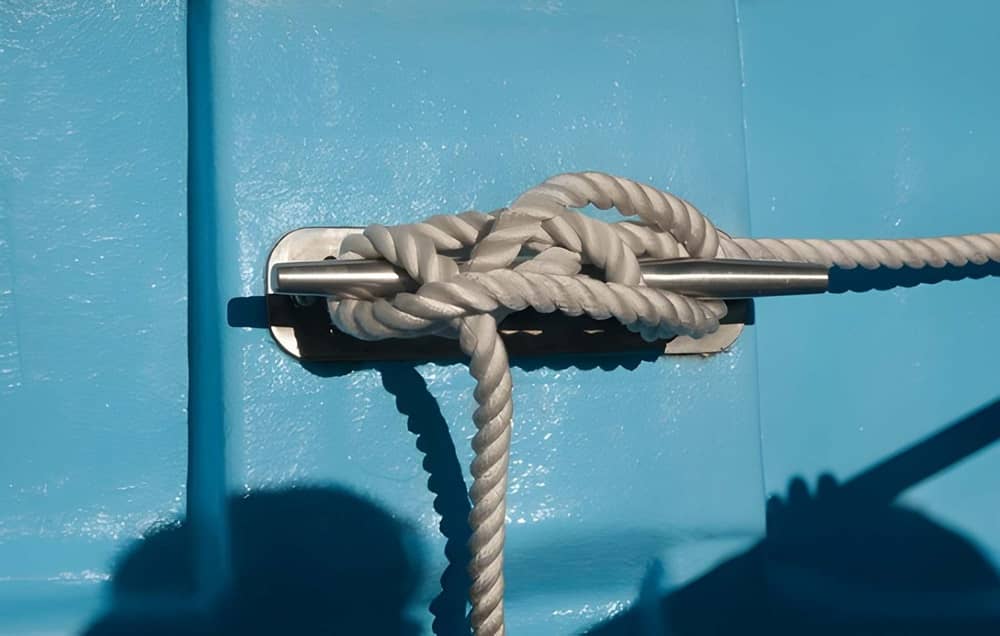
Choosing the right rope is essential for safety, longevity and getting the best out of your rope. A rope made from the wrong material for what you want to use it for can lead to fraying and snapping under pressure or deterioration under harsh environmental elements.
Things to consider when choosing your rope:
1. Safety and Load Management
When structural integrity is important, where snapping under load could even be fatal, there are ropes designed to manage loads safely.
- High-Tenacity Polyester. This rope offers low stretch and great durability. It’s perfect for sailing or situations where sudden ‘gives’ could be dangerous.
- Ultra-High-Molecular-Weight Polyethylene (UHMWPE). This rope has high strength-to-weight ratios and load-bearing capacity. It is used in rescue operations where safety is of the utmost importance.
2. Environmental and Abrasions Resistance
In environments with exposure to water, chemicals and even UV light, you need a rope that won’t degrade thanks to the environment nor will it suffer from friction tears.
- Marine Applications. This style of rope is ideal for marine and boating situations, where not only is there water, it is salty and corrosive. Plus there is the added UV element, all impacting the quality of your rope.
- Industrial or Off-Road. This style of rope needs abrasion resistance to prevent catastrophic snapping when pressure is applied. The environments they’re used in are hardly controlled. Often there are rocks and sharp edges and rough ground to work with.
3. Specialised Design and Usability
Sometimes you need rope for a specific or unique purpose. You need extremely stiff ropes for craft projects or elastic rope for stretch and cushioning. Tightly braided ropes can prevent sagging while still giving some flex when you need it.
Rope Materials Explained
What a rope is made of determines its overall strength, elasticity and durability. This is important in deciding what a rope will be used for and where it will be used.
Understanding what a rope is made from helps you choose the right rope for marine use, industrial applications, or for in and around your home.
Synthetic Materials
- Polyester: This is the standard for general-purpose use rope. It offers high tensile strength, minimal stretch, and excellent resistance to UV rays and abrasion. This makes it perfect for outdoor and marine environments.
- Nylon: The most elastic of the common synthetics, nylon rope is excellent for shock absorption. It is frequently used for dock lines and anchor warps. Note that its strength decreases slightly when wet.
- Polypropylene: An economical, lightweight material that floats. It does not absorb water and is highly resistant to rot and mildew. This makes it popular for water sports and general marine use.
- UHMWPE (e.g., Dyneema): An ultra-high-molecular-weight polyethylene that is light enough to float but pound-for-pound stronger than steel. It is abrasion-resistant with almost zero stretch. You would see it utilised in high-performance applications like yacht racing and heavy-duty winching.
Specialty & Natural Materials
- Vectran: This is a high-performance liquid crystal polymer fibre. It offers similar low-stretch and high-strength benefits as Dyneema but with superior heat resistance. This stops it from melting under extreme winch friction. You would see Vectran used in parachutes and airbags, mooring lines and fall-protection safety systems.
- Natural Fibres: Some ropes are made from materials like cotton, sisal, or Manila. They hold knots well and do not melt, but they are susceptible to rot if stored wet and require regular drying out.
Rope Construction: Braided vs Twisted
Knowing how it is constructed can also help with your choice. In general, braided ropes give you more strength, flexibility and less kinking problems. Twisted ropes are elastic, easy to splice and more economical for your budget.
Braided Rope
These are constructed by interlacing multiple strands in a diagonal, over-and-under pattern. It is similar to basket weaving.
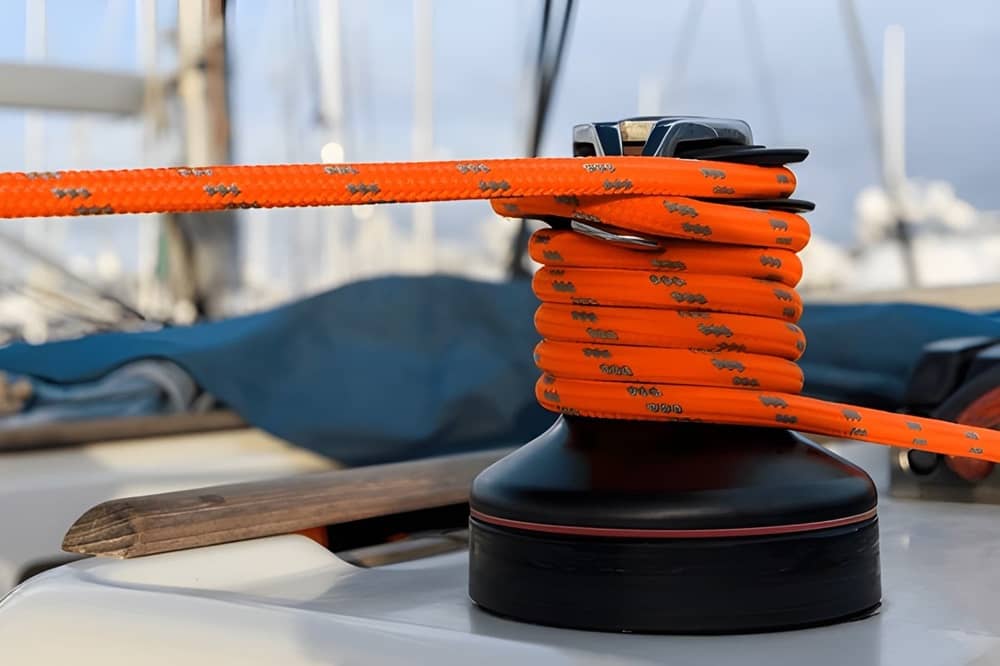
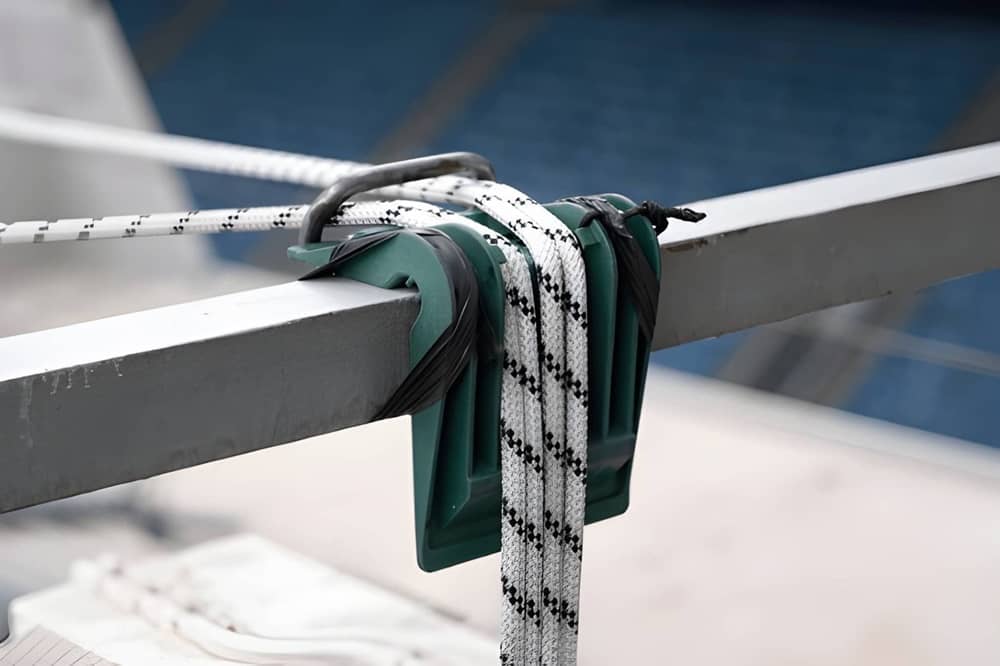
Common varieties of a braided rope include solid, which is dense, round and holds its shape very well; Hollow, which has no core, is lightweight and floats; and a Double-Braid, which is essentially a rope within a rope. It has a braided core and a protective braided sheath.
Braided ropes are generally stronger and have a higher tensile strength rating when compared to twisted ropes. They also stretch less which makes them excellent for precise load control. Good for tying down loads on trailers, for example.
They are highly flexible and have a smooth surface, so this can make it tricky to tie knots. You need to be specific with the types of knots you use so they hold without slipping.
Twisted Rope
Twisted rope is created by twisting individual fibres into yarn. This yarn is then coiled together in the opposite direction to create a balanced and cohesive structure. This style of rope is generally more elastic than a braided rope. The stretch acts as a sort of shock absorber, which is good for quick instances of force. However , if there is a slower force causing the rope to contract, it can lead to fraying and splitting.
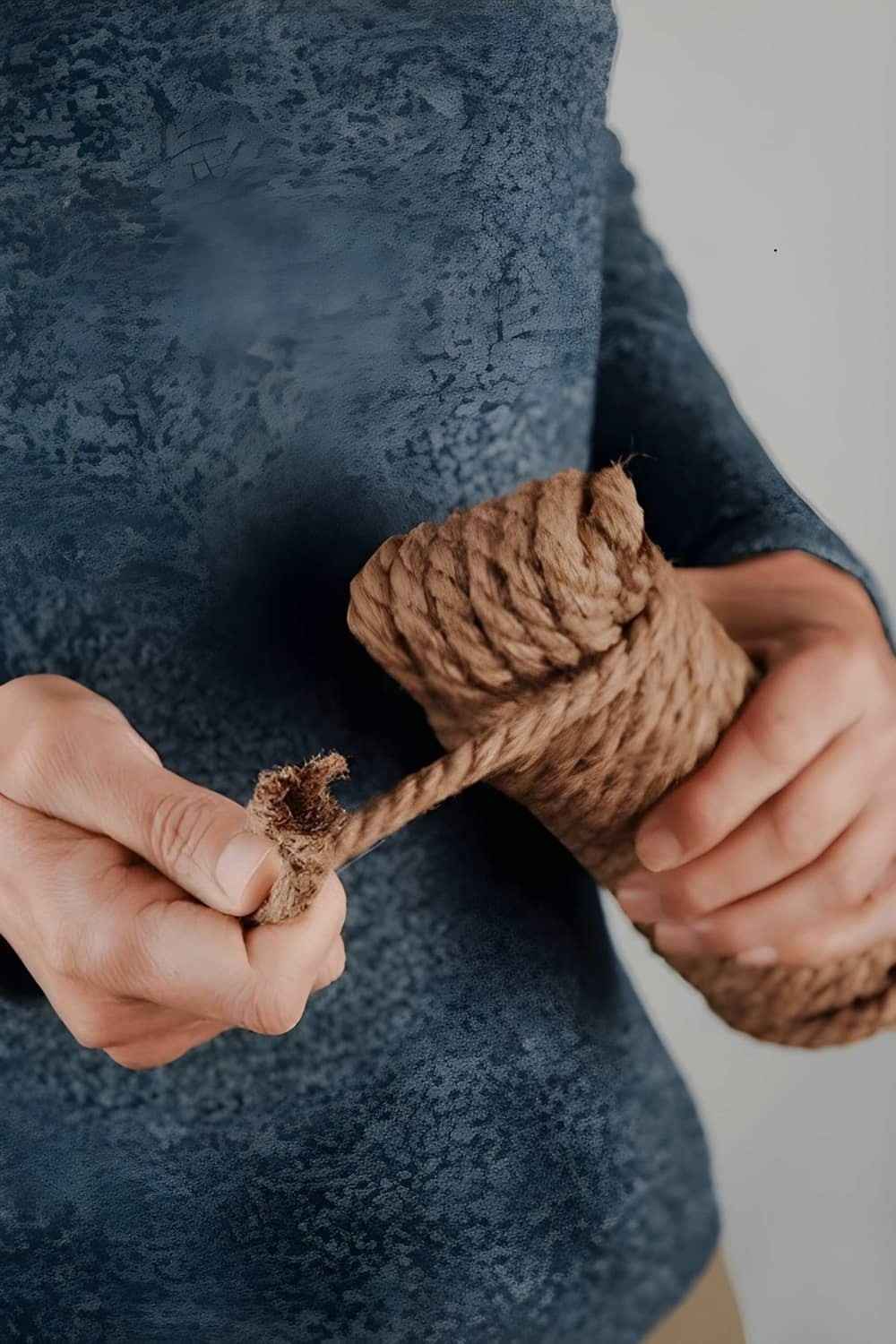
A twisted rope grips well in the hand, but they are prone to kinking and unravelling if under heavy loads.
Twisted ropes do well when spliced. Eye splices can still retain up to 95% of a twisted rope’s original strength.
Because twisted ropes have a simpler crafting method, generally they are cheaper than braided ropes.
Choosing Marine Rope
Now you know of the two main ways rope is crafted, you need to identify the application of the rope and then choose the right construction. You can select high-strength, low-stretch Double-Braid Polyester (or “Yacht Braid”) for halyards and control lines, and utilise shock-absorbing Nylon for anchor and dock lines. We have a solid range of marine ropes for you to choose from.
Identify your application
What are you going to use the rope for?
- Halyards and Sheets. For this you need minimal stretch and high strength. This lends itself to Double-Braid Polyester, also good for general running rigging. If you’re a high-performance sailor, Vectran Double-Braid will offer you even greater strength and almost no stretching.
- Dock and Anchor Lines. With the motion of boats on the water, constantly tugging on mooring lines, you need a rope that can absorb dynamic shock loads without snapping. Double-Braid Nylon is great due to its elasticity and resistance to abrasion.
- General Boating & Mooring. For general boat work, you want rope that is water resistant and UV resistant.
Choose the Right Construction
- Double-Braid. Two ropes in one, this type of crafting provides high strength and a smooth surface that runs well through cleats.
- 3-Strand. A classic twisted rope, it is highly elastic and easy to inspect for wear. Easy to tie off, and splice, this is your anchor line specialist.
Choosing Industrial Rope
The other big application for ropes is industrial. Tying down loads, securing materials for lifting or towing. You need a rope that is secure and strong enough to meet Australian industrial conditions.
Are you lifting, towing or securing?
- Polypropylene. Lightweight floats on water, it resists rot and mildew and many chemicals. Perfect for safety lines and securing
- Polyester. High strength and high durability with low stretch. Double-braided polyester rope is used for heavy lifting.
- Nylon. High elasticity and great shock absorption, it is the perfect rope for towing and securing loads during transport.
Getting the Right Advice
Choosing the right rope comes down to understanding three things:
- The material it’s made from,
- how it’s constructed, and
- the environment it needs to perform in.
Get those three right, and you’ll have a rope that holds up to the job, whether that’s running rigging on a yacht, securing a load on a construction site, or tying down gear around the house.
If you’re still unsure which type or material suits your application, the team at Whittam Ropes can help. With over 40 years of manufacturing experience as rope wholesalers and suppliers based in Melbourne, Whittam Ropes supplies marine ropes and industrial ropes to customers Australia-wide. We have a range of more than 2,000 marine and industrial cordage products and we can advise on the right rope for your needs, including custom colours, lengths and sizing.
Based in Carrum Downs, Victoria, we supply Australia-wide. Get in touch with our team today to find the right rope for your job.
Leave A Comment